Faculdade EBRAMEC Holds World Chinese Medicine Week 2026
From October 11 to 17, 2026, Faculdade EBRAMEC (EBRAMEC College of Chinese Medicine, São Paulo, Brazil) held World Chinese Medicine Week 2026, offering a free program dedicated to disseminating knowledge of Chinese Medicine and providing hands-on experience of its practices.
To celebrate the occasion, the institution promoted more than 10 free activities, both on-site and online, including special clinical sessions, workshops, mind-body practices, lectures and live broadcasts. The activities covered different areas of Chinese Medicine and were open to students and professionals in the field from various institutions, as well as to the general public. Through this initiative, Faculdade EBRAMEC reaffirms its commitment to high-quality education and to the advancement of Chinese Medicine in Brazil, Latin America and the Portuguese-speaking countries.
The Week in Numbers
- More than 10 free activities
- 719 registrations
- 124 on-site participations
- Over 5,000 interactions across online activities and social media (YouTube and Instagram)
Activities
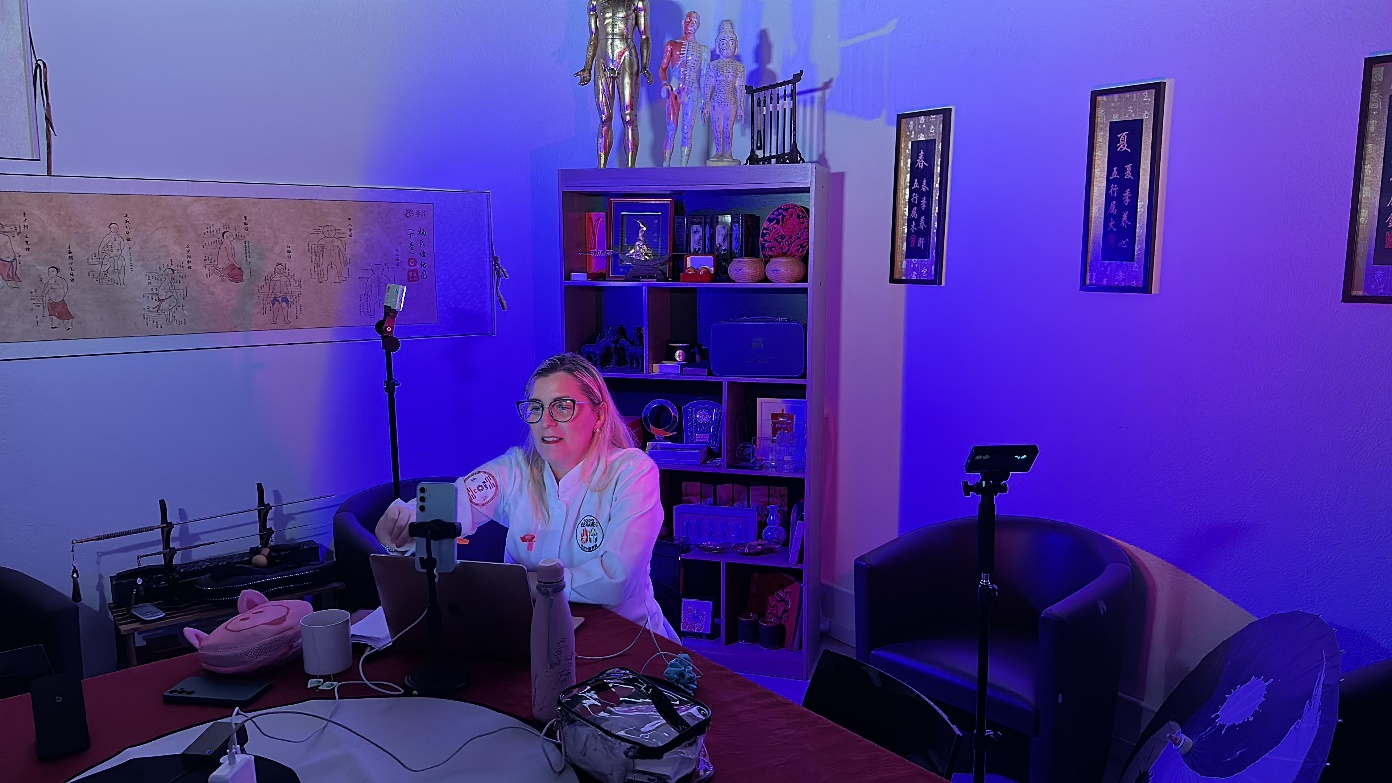
In this session, Prof. Rebello presented a recipe inspired by the principles of the Kan Li Method. Through a cooking demonstration, he showed in a practical way how the fundamentals of Chinese Medicine can guide everyday eating, particularly during spring. The video is available on the Faculdade EBRAMEC YouTube channel.
Watch:
Pediatric Tui Na (Xiao Er Tui Na)
On October 12, Children’s Day in Brazil, Prof. Ana Fidalgo presented a session on Xiao Er Tui Na, the Chinese massage therapy for children. Systematized over centuries within the Chinese tradition, this modality differs from Tui Na for adults. It uses gentle, rhythmic and repetitive manipulations, applied mainly to specific points and lines on the child’s hands, forearms and other areas of the body.
The session presented the principles of this approach and its role in pediatric care within Chinese Medicine, drawing on the work carried out at the Faculdade EBRAMEC Xiao Er Tui Na Clinic. Made available on YouTube, the activity helped raise awareness of this practice among parents, educators and therapists, and highlighted the diversity of resources within Chinese Medicine.
Watch:
During the broadcast, she presented the possible contributions of Chinese Medicine and the approaches adopted at the Faculdade EBRAMEC Special Oncology Clinic, always in conjunction with medical care, to promote the well-being and quality of life of women and cancer patients. The live format allowed direct interaction with the audience, who were able to send questions and clarify their doubts with the teacher.
Watch:
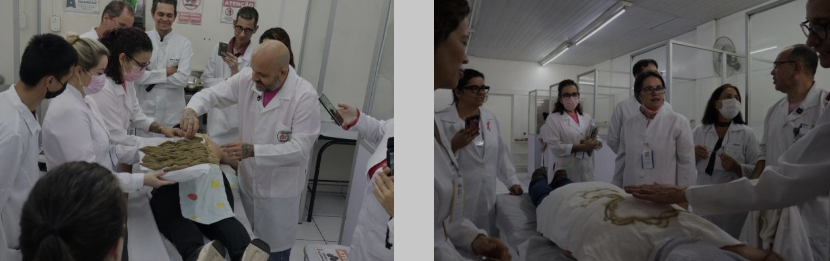
Special Clinical Demonstration: Dragon Moxa and Fire Therapy
On October 14, Prof. Vladimir Almada and Prof. Rodrigo Castello led an on-site special clinical session dedicated to the heat therapies of Chinese Medicine. Moxibustion is one of the oldest techniques in this tradition. It uses the heat produced by burning mugwort (Ai Ye), applied as sticks, cones or on the acupuncture needle, to selected points and areas of the body, with the aim of warming the channels and promoting the circulation of Qi and Blood. On this occasion, the technique known as Dragon Moxibustion was widely applied along the Governing Vessel (Du Mai), using moxa and ginger.
Fire Therapy, also known as Huo Liao and, in Brazil, as “fire towel” (toalha de fogo), is a traditional technique that applies intense, controlled heat to specific areas of the body, which are protected by damp towels, with the use of alcohol. Under the supervision of the teachers and following proper safety protocols, participants observed the application of both techniques, learned about their traditional indications and broadened their exposure to different therapeutic resources of Chinese Medicine.
Both techniques are taught and disseminated by Faculdade EBRAMEC through its course on External Therapies of Chinese Medicine (中医外治疗法), which covers their various applications.
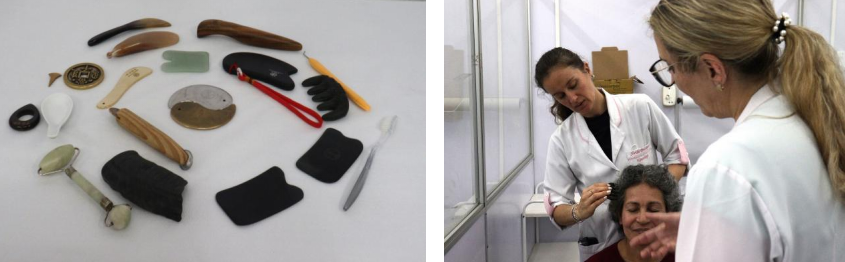
On October 15, Prof. Fabiana Conte led a special clinical session dedicated to women’s health, with a focus on Gua Sha. In this traditional technique, a smooth-edged tool, usually made of jade, horn or other materials, is glided over the skin with specific pressure and direction. According to the principles of Chinese Medicine, its purpose is to promote the circulation of Qi and Blood and to relieve tension.
During the session, participants observed the application of the technique and learned about its indications, precautions and applications in the context of women’s health, always under the guidance and supervision of the teacher.
Aromatic Sachet Workshop - Xiangbao
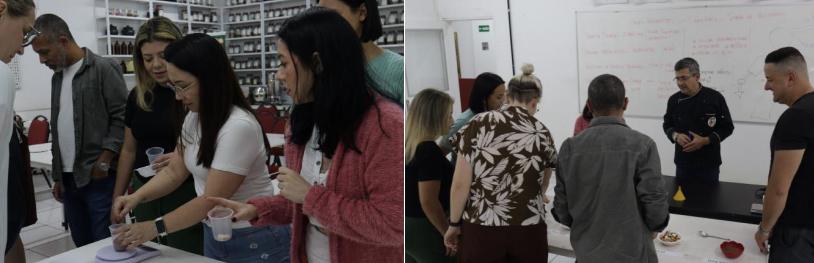
On the same day, Prof. Jorge Rebello led the Aromatic Sachet Workshop (Xiang Nang). Herbal aromatic sachets have a long tradition in Chinese culture and are traditionally associated with the Dragon Boat Festival (Duanwu). They were worn on the body or placed in living spaces, in accordance with popular customs and the properties attributed to the herbs.
During the workshop, Prof. Rebello introduced the herbs used and their applications in the Chinese Medicine tradition. Participants examined, handled and ground the herbs and filled the aromatic sachets, following each step of the preparation. The workshop provided direct contact with the materials of Chinese herbal medicine and a hands-on learning experience through traditional craftsmanship, and each participant took home their own aromatic sachet.
Clinical Case Discussion
On October 16, Prof. Rodrigo Castello delivered a lecture on clinical case discussion through the Faculdade EBRAMEC Digital Platform. In Chinese Medicine, case analysis is essential for developing clinical reasoning, especially pattern differentiation (Bian Zheng), which guides the choice of treatment according to the individual characteristics of each patient.
The session presented cases analyzed in light of the fundamentals of Chinese Medicine, from diagnosis to the definition of the therapeutic approach. It bridged theory and clinical practice and contributed to the education of students and professionals in the field.
Tui Na and Quick Massage Clinical Session
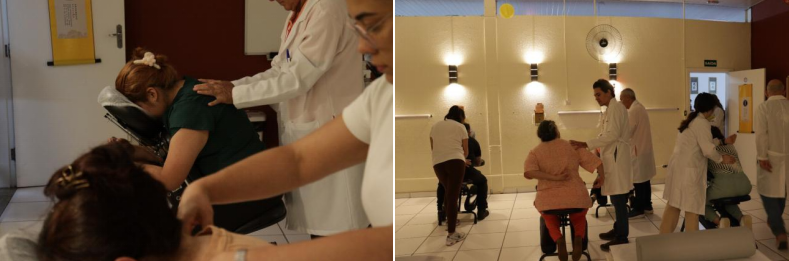
Also on October 16, Prof. Luciana Saito led a clinical session combining Tui Na and Quick Massage. Tui Na is one of the main branches of Chinese Medicine and uses specific manipulations, such as pushing, pressing, kneading and rubbing, applied to channels and acupuncture points based on Chinese Medicine diagnosis. Quick Massage, widely practiced in the West, is a short technique performed with the recipient seated in a specially designed chair, aimed at the quick relief of tension.
With different origins, formats and goals, the two techniques can complement each other in relieving muscle tension and promoting well-being. During the session, students and professionals improved their practical skills under faculty supervision, and members of the public were able to receive Quick Massage sessions.
Lecture Series: Experience from The Study Trip in China
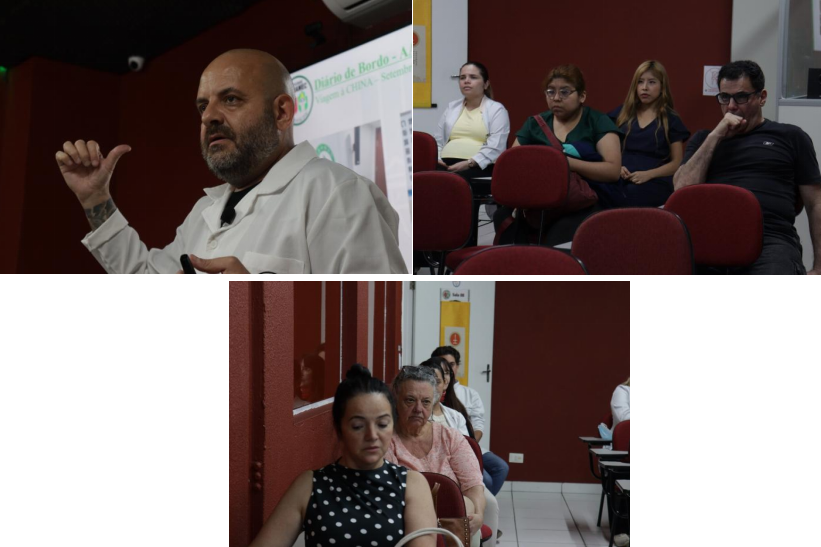
Still on October 16, Prof. Rodrigo Castello led the lecture series “Experience in China” in a hybrid format, with both on-site and online participation. In his lecture, he shared his experience in the 15th Faculdade EBRAMEC Study Group in China, held in September 2026, which included visits to universities and hospitals in Hebei and Shandong provinces. He described the routine of different hospital departments and aspects of the culture of the country where Chinese Medicine originated and where it continues to be widely practiced.
The hybrid format broadened access to the content and allowed participants from different locations to attend. The lecture highlighted the importance of international exchange in Chinese Medicine education.
Closing Remarks
With 719 registrations, 124 on-site participations and over 5,000 interactions on digital platforms, whose content remains available online, World Chinese Medicine Week 2026 has established itself as an important annual event of Faculdade EBRAMEC, fostering integration among its students, professionals in the field and the wider community. The strong participation, both on-site and online, demonstrates the growing interest in Chinese Medicine in Brazil.
Faculdade EBRAMEC thanks all the teachers, staff and participants who contributed to the success of the program. The institution reaffirms its commitment to the dissemination, teaching and development of Chinese Medicine, as well as to the celebration of World Chinese Medicine Day and World Chinese Medicine Week, in collaboration with the World Federation of Chinese Medicine Societies (WFCMS).